

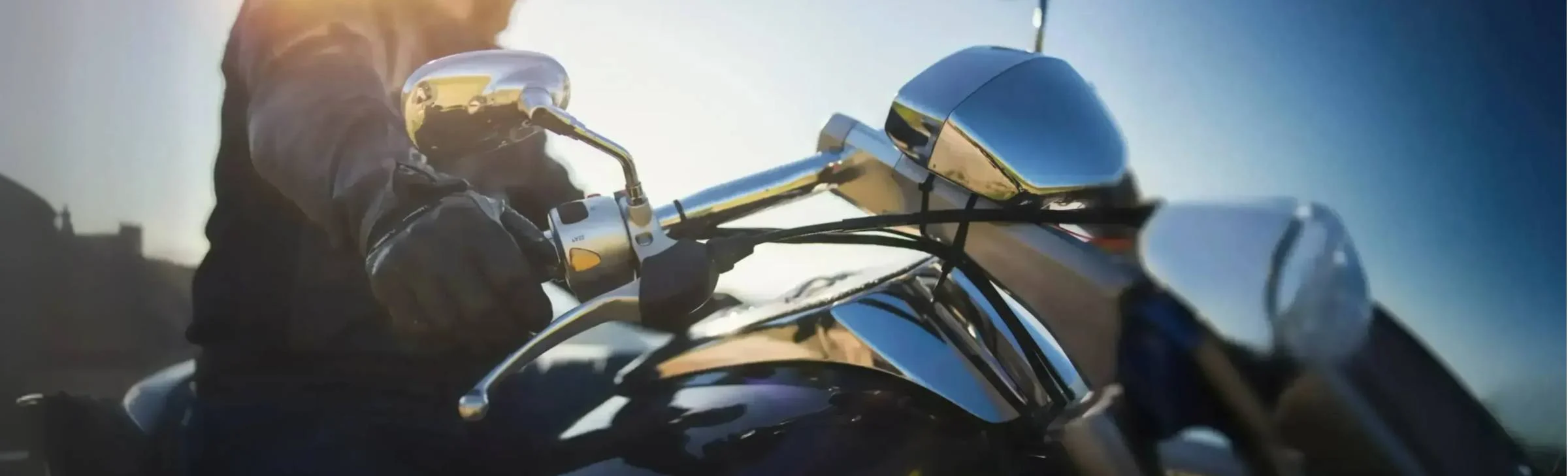





Road Justice Tip: Every strategy on this list serves double duty. It protects your life on the road, and it protects your legal case if someone else’s negligence puts you on the ground. The rider who wears a helmet, wears gear, rides trained, rides sober, rides defensively, and maintains their motorcycle is the rider who presents the strongest possible case in court. Be that rider.
Hip Fire: Quick Bullets Nailing The Answers Covered in this FAQ
(detail with sources below)
- Per vehicle mile traveled, motorcyclists are roughly 22 times more likely to die than car occupants. These six strategies are proven to cut that risk sharply.
- Strategy 1 — Helmets: The single most effective lifesaver. DOT-compliant helmets reduce fatal injury risk by 37% (operators) and 41% (passengers), and reduce brain injury risk by 69% (NHTSA/CDC/TxDOT). Helmets saved an estimated 1,872 lives nationally across 2017–2023.
- Strategy 2 — Rider Training: Texas requires all Class M license applicants to complete a TDLR-approved MSF curriculum course. In FY2024, 23,144 novice students were trained statewide. Trained riders show better hazard recognition and lower crash involvement.
- Strategy 3 — Protective Gear (ATGATT): Leather or abrasion-resistant clothing reduces road rash severity by 80–90% (NHTSA/CDC). High-visibility gear improves conspicuity. Boots protect ankles; gloves protect hands and grip.
- Strategy 4 — Defensive Riding & “Look Twice”: About 40% of Texas motorcycle fatalities occur at intersections. TxDOT’s “Share the Road: Look Twice for Motorcycles” campaign urges drivers to double-check mirrors and blind spots.
- Strategy 5 — Ride Sober, Ride Smart: Alcohol is involved in 28–44% of fatal motorcycle crashes (Texas and national). Speeding is involved in 33–35% of rider fatalities, 1.5 times the rate of car drivers.
- Strategy 6 — Pre-Ride Checks & Road Awareness: The T-CLOCS checklist (Tires, Controls, Lights, Oil, Chassis, Stands) prevents roughly 10–15% of mechanical-related crashes.
- Every one of these strategies also strengthens your injury case. Helmeted, trained, sober, properly equipped riders present the strongest evidence of damage in court, and a skilled Texas motorcycle accident attorney can use that record to help counter insurance attempts to shift blame onto the rider and maximize recovery.
The Number Every Texas Rider Should Know
Before we get into the specific strategies, here is the one statistic that puts everything in perspective. Per vehicle mile traveled, motorcyclists are approximately 22 times more likely to die in a crash than people riding in cars. Not twice as likely. Not five times as likely. Twenty-two times.
That number is not meant to scare you off your bike. It is meant to motivate you to do everything in your power to shift the odds back in your favor. And the good news is that every strategy on this list is proven — by government data, not opinions — to significantly reduce your risk of being killed or seriously injured.
These same strategies also have a second benefit that most riders do not think about until it is too late: they strengthen your legal case if you are ever injured by someone else’s negligence. A helmeted, trained, sober, well-equipped rider who followed defensive riding principles presents the strongest possible damage case in court. Insurance adjusters and defense attorneys have far less ammunition to shift blame.
Source: NHTSA/MSF National Agenda for Motorcycle Safety; TxDOT Triennial Highway Safety Plan FY 2024–2026; NHTSA Countermeasures That Work (10th edition)
Strategy 1: Wear a DOT-Approved Helmet
We covered helmets in depth in our helmet law FAQ, but it belongs here at the top of every prevention list because it is the single most effective injury prevention strategy available to any motorcyclist, anywhere.
| What the Data Shows | Number | Source |
| Reduction in fatal injury risk (operators) | 37% | NHTSA / TxDOT |
| Reduction in fatal injury risk (passengers) | 41% | NHTSA |
| Reduction in brain injury risk | 69% | NHTSA / CDC |
| Increased TBI risk if unhelmeted | 3× more likely | TxDOT |
| Lives saved nationally (2017–2023 updates) | ~1,872 | NHTSA |
| Unhelmeted in TX fatal crashes (2024) | ~45–52% | TxDOT CRIS |
TxDOT and the Texas Department of Insurance both recommend wearing a DOT-approved full-face or modular helmet — not a novelty helmet, not a half-shell, but a properly certified full-face helmet that provides maximum coverage for your chin, jaw, and face. Full-face helmets offer the most protection because a significant percentage of crash impacts hit the chin area.
Under Texas law (Transportation Code § 661.003), helmets are mandatory for all riders under 21. Riders 21 and older can legally go without one if they have completed an approved MSF-style training course or carry at least $10,000 in motorcycle-specific medical insurance. But the data does not care about your legal exemption — a helmet cuts your risk of dying by more than a third and your risk of brain injury by more than two-thirds.
Source: TxDOT Motorcycles Portal (helmet stats + effectiveness) — data.texas.gov/stories/s/Texas-Department-of-Transportation-Traffic-Safety-/hz2w-23dc/; NHTSA Helmet Page — nhtsa.gov/road-safety/motorcycles; Texas HSP FY 2024–2026 (p.18, helmet education in coalitions)
For Your Case: Wearing a helmet eliminates the comparative negligence argument on head injuries. If you still suffered a brain injury despite wearing a helmet, it powerfully demonstrates the violence of the crash, which supports higher damages.
Strategy 2: Complete a Rider Training Course
Texas takes rider training seriously — more seriously than most states. Since 2009, every applicant for a Class M motorcycle endorsement must complete a TDLR-approved course based on the Motorcycle Safety Foundation (MSF) curriculum before they can get their license. The skills test at the DPS office is often waived for riders who complete the course.
What the Training Covers
The MSF Basic Rider Course (BRC) — the foundation of Texas’s mandatory training — teaches the skills that save lives in real-world riding:
- Emergency braking. How to stop quickly without locking up or losing control.
- Swerving and obstacle avoidance. How to make a sudden directional change when a car pulls out in front of you.
- Cornering technique. How to lean into turns properly and maintain control at speed.
- Pre-ride inspection. How to check your motorcycle for mechanical issues before every ride.
- Defensive riding strategies. How to position yourself in the lane, scan for hazards, and anticipate what other drivers will do.
- Emergency maneuvers. How to handle situations that go wrong — gravel in a turn, a car cutting you off, a sudden stop ahead.
Texas by the Numbers
In FY2024, approximately 23,144 novice students completed motorcycle training courses in Texas. Courses are administered through TDLR (Texas Department of Licensing and Regulation) approved providers located throughout the state. You can find a course near you through the TDLR motorcycle operator training page.
NHTSA’s “Countermeasures That Work” research links rider training to lower crash involvement, especially for novice riders. Trained riders show measurably better hazard recognition — they spot dangers earlier and react faster than untrained riders.
Advanced Courses for Experienced Riders
The BRC is just the beginning. MSF also offers advanced courses for experienced riders that sharpen skills over time. Additionally, Texas ABATE and local coalitions (like the San Angelo Motorcycle Safety Coalition) partner with TxDOT to offer supplemental “Basic Riding” and “Share the Road” classes throughout the year.
Source: TDLR Motorcycle Operator Training (course locator + manual) — tdlr.texas.gov/mot/; MSF State Programs (Texas section) — msf-usa.org; FY2024 Texas Motorcycle Training Survey Results — looklearnlive.org; NHTSA Countermeasures That Work
For Your Case: Completing a training course proves you took riding seriously. It counters the “reckless thrill-seeker” narrative insurance adjusters love to push. Keep your course completion certificate — it is evidence of your commitment to safety.
Strategy 3: Wear Protective Gear — All of It, Every Time (ATGATT)
The riding community has a phrase for this: ATGATT — All The Gear, All The Time. It means wearing full protective clothing on every single ride, not just long trips or highway runs. The crash you did not see coming is the one that happens on a five-minute ride to the gas station.
What the Data Says About Gear
| Gear Item | What It Does | Effectiveness |
| Leather / abrasion-resistant jacket & pants | Prevents or reduces road rash — the shredding of skin against pavement at speed | Reduces road rash severity by 80–90% (NHTSA/CDC) |
| High-visibility / reflective gear | Makes you more visible to other drivers, day and night | Improves conspicuity in the exact scenarios where “didn’t see the bike” kills |
| Motorcycle-specific boots | Protects ankles, feet, and lower legs from crush and twist injuries | Ankle/foot injuries are among the most common in motorcycle crashes |
| Gloves | Protects hands, improves grip on controls | Hand injuries can permanently impair your ability to work and ride |
Road rash is not just a scrape. In a motorcycle crash at even moderate speed, the pavement acts like a belt sander on your skin. Severe road rash requires skin grafts, causes permanent scarring, and leads to weeks or months of painful recovery. Leather or modern abrasion-resistant riding gear reduces that severity by 80 to 90 percent.
TxDOT campaigns emphasize full-coverage gear to prevent both dehydration (a factor in long Texas rides during summer) and crash injuries. Road rash and fractures are especially common in urban intersection crashes — the same crash type that dominates Texas’s Top 20 counties.
Source: NHTSA Protective Gear Guidance — nhtsa.gov/road-safety/motorcycles; TxDOT “Look Twice” Fact Sheet — txdot.gov/content/dam/docs/division/trf/safety/motorcycle-safety/motor-fact-sheet-eng.pdf
For Your Case: Your damaged gear is physical evidence. Scuffed jacket? Road rash would have been far worse without it. Cracked helmet? Proves the force your head absorbed. Preserve everything for your dedicated Texas motorcycle accident attorney.
Strategy 4: Ride Defensively — and Push for Drivers to “Look Twice”
Roughly 40% of motorcycle fatalities in Texas occur at intersections (TxDOT 2024 data). The dominant cause is the same one that shows up year after year: a driver fails to see the motorcycle. “Inattentional blindness” — where a driver looks right at you but their brain does not register you — is the number-one multi-vehicle crash cause for riders.
What You Can Do as a Rider
- Lane positioning. Ride in the portion of the lane that gives you the best visibility to other drivers and the best view of potential hazards. In most situations, this means the left third of your lane.
- Use your headlight — always. Run your headlight during the day, and use your high beam in daylight when it will not blind oncoming traffic. A lit motorcycle is easier to see than a dark one.
- Signal early and often. Give drivers as much warning as possible when you are about to turn or change lanes.
- Stay out of blind spots. If you cannot see the driver’s eyes in their mirror, they cannot see you.
- Ride predictably. Weaving, sudden lane changes, and erratic speed make it harder for drivers to track you.
- Cover your brakes. Keep your fingers near the front brake lever and your foot near the rear brake when approaching intersections. One or two seconds of reaction time can be the difference between a close call and a catastrophe.
TxDOT’s “Share the Road: Look Twice for Motorcycles” Campaign
TxDOT launched its statewide “Share the Road: Look Twice for Motorcycles” campaign in 2010, and it remains active through 2025. The campaign targets car and truck drivers — urging them to check mirrors and blind spots twice before turning left, changing lanes, or entering an intersection. The message is simple: motorcycles are harder to see, so you need to look harder.
In 2024, 581 riders were killed, and 2,534 were seriously injured in Texas. Urban counties — Houston, Dallas, San Antonio, Fort Worth, Austin — account for the majority of these crashes. The intersection crash problem is concentrated in exactly the places where traffic is densest, and drivers are most distracted.
Source: TxDOT Motorcycle Safety Campaign — txdot.gov/safety/traffic-safety-campaigns/motorcycle-safety.html; TxDOT 2024 Crash Facts (intersection data) — txdot.gov/content/dam/docs/division/trf/crash-records/2024/10.pdf; 2025 TxDOT “Look Twice” Digital Toolkit
For Your Case: If the other driver says “I didn’t see the motorcycle” — and you were running your headlight, wearing visible gear, riding in a proper lane position, and obeying traffic laws — that statement is an admission of negligence, not a defense. Your defensive riding habits become evidence in your favor.
Strategy 5: Ride Sober and Respect the Speed Limit
Alcohol and speed are the two factors that most often turn a survivable situation into a fatal one — and they are dramatically over-represented in motorcycle crashes compared to car crashes.
The Alcohol Numbers
Nationally, 28% of motorcycle riders in fatal crashes had a blood alcohol concentration of 0.08 or higher (NHTSA) — the highest impairment rate of any vehicle type. In Texas, alcohol is involved in roughly 44% of fatal motorcycle crashes (rider, other driver, or both). In single-vehicle fatal motorcycle crashes — where the rider loses control without another vehicle involved — the impairment rate jumps to 43%.
The pattern is clear: alcohol-impaired riding is overwhelmingly a factor in single-vehicle crashes where the rider goes off the road, fails to negotiate a curve, or loses control. The simplest, most effective thing you can do to avoid a single-vehicle fatal crash is to ride sober. Period.
The Speed Numbers
33 to 35% of motorcycle riders involved in fatal crashes were speeding — compared to just 22% for passenger car drivers. That is 1.5 times the rate. Speed reduces your reaction time, increases your stopping distance, and amplifies the force of any impact. At motorcycle speeds, even a few extra miles per hour can be the difference between a crash you walk away from and one you do not.
TxDOT coalitions target impaired riding through education campaigns, and the Texas Strategic Highway Safety Plan (2022–2027) includes “Ride Sober” messaging as a key motorcycle safety initiative.
Source: NHTSA 2025 Motorcycle Safety Resource Guide (impairment + speed stats) — trafficsafetymarketing.gov; Texas Strategic Highway Safety Plan 2022–2027 — texasshsp.com
For Your Case: If you were sober and riding at or under the speed limit, those facts are powerful evidence. They eliminate two of the biggest weapons insurance companies use to shift blame onto riders. Conversely, if you were impaired or speeding, it gives the other side ammunition under Texas’s comparative fault rules.
Strategy 6: Pre-Ride Inspection and Road Awareness
This is the strategy that sounds boring but saves lives. A quick mechanical check before every ride prevents the kind of failures that cause crashes — a blown tire, a failed brake, a burnt-out headlight.
The T-CLOCS Checklist
MSF and every Texas training course teach the T-CLOCS pre-ride checklist. It takes about two minutes and covers the six systems most likely to fail:
| Letter | System | What to Check |
| T | Tires | Pressure, tread depth, sidewall condition, no nails or embedded objects |
| C | Controls | Levers, pedals, cables, hoses, throttle — all move freely and return to position |
| L | Lights | Headlight (high/low), tail light, brake light, turn signals, all working |
| O | Oil & Fluids | Engine oil level, coolant, brake fluid, fuel level |
| C | Chassis | Frame, suspension, chain/belt, fasteners — nothing loose, cracked, or leaking |
| S | Stands | Side stand and center stand (if equipped) retract fully and spring back correctly |
MSF and NHTSA data indicate that proper mechanical maintenance prevents roughly 10 to 15 percent of mechanical-related crashes. A tire blowout at highway speed, a brake failure at an intersection, or a headlight that is not visible to oncoming traffic — these are preventable failures that become life-or-death situations on a motorcycle.
Road Awareness: Scan for Hazards
Beyond your motorcycle’s condition, you need to constantly scan the road itself. TxDOT highlights road conditions in its safety campaigns, and riders in Texas’s Top 20 crash counties should be especially alert for debris in the lane, oil patches at intersections, potholes and crumbling road edges, gravel on curves (especially on rural scenic routes), and construction zones with steel plates, uneven pavement, and loose gravel.
Source: TDLR Motorcycle Operators Manual (pre-ride test section) — tdlr.texas.gov/mot/pdf/; MSF T-CLOCS Inspection Checklist; NHTSA Countermeasures That Work
For Your Case: If a mechanical failure contributed to your crash (and it was not your fault — for example, a defective tire or a road hazard), your pre-ride inspection log shows you did your part. It also opens the door to product liability or government liability claims that your attorney can pursue.
All Six Strategies at a Glance
| Strategy | Risk Reduction | Case Benefit |
| 1. DOT Helmet | 37–41% fatal injury; 69% brain injury | Eliminates helmet-based comparative negligence; stronger TBI evidence |
| 2. Rider Training | Lower crash involvement (novices); better hazard recognition | Proves responsible rider; counters “reckless” narrative |
| 3. Full Protective Gear | 80–90% road rash reduction; improved visibility | Damaged gear = physical evidence of impact force |
| 4. Defensive Riding | Reduces intersection/visibility crashes (~40% of TX fatalities) | “I didn’t see the bike” becomes an admission of negligence |
| 5. Sober + Speed Limit | Removes 28–44% alcohol and 33–35% speed factors | Eliminates the two biggest insurance blame-shifting weapons |
| 6. Pre-Ride T-CLOCS | Prevents ~10–15% mechanical-related crashes | Shows diligence; opens product/road liability if the defect caused the crash |
Texas Statewide Initiatives Tying It All Together
TxDOT does not treat these strategies in isolation. Their Triennial Highway Safety Plan and “End the Streak” campaigns integrate all six strategies into a unified approach, including motorcycle safety coalitions operating across the state, billboard campaigns on high-risk roads (including scenic routes like the Three Sisters in the Hill Country), EMS and first-aid training partnerships, and partnerships with local groups like Texas ABATE for rider education and outreach.
Nationally, NHTSA and the Motorcycle Safety Foundation co-developed the National Agenda for Motorcycle Safety, which prioritizes these same countermeasures as the most effective tools for reducing motorcycle deaths and injuries.
Source: TxDOT Crash Statistics & Safety Campaigns — txdot.gov; NHTSA Motorcycle Safety — nhtsa.gov/road-safety/motorcycles; CDC Motorcycle Injury Prevention — cdc.gov/pedestrian-bike-safety/about/motorcycle-safety.html; Texas HSP FY 2024–2026
What You Should Do Right Now
- Wear a DOT-approved full-face helmet every ride — even if you are legally exempt. The data is overwhelming.
- If you have not taken a rider training course (or it has been more than a few years), sign up for an MSF refresher through TDLR. Skills degrade over time.
- Invest in proper gear — jacket, pants, boots, gloves — and wear it every single ride. ATGATT is not a slogan; it is a survival strategy.
- Practice defensive riding habits at every intersection. Assume you are invisible. Cover your brakes. Signal early.
- Never ride impaired. Not even one beer. The margin between alive and dead on a motorcycle is razor-thin, and alcohol eliminates whatever margin you had.
- Run the T-CLOCS checklist before every ride. Two minutes of prevention can save your life — and your legal case.
- Review your insurance. Make sure your PIP and UM/UIM limits match the severity of risk you face. These strategies reduce your risk, but they cannot eliminate it.
If you’ve been injured in a motorcycle accident or want to make sure you’re fully protected before one happens, don’t wait. Contact a trusted motorcycle accident lawyer in Texas today for a free consultation and get clear answers about your rights, your coverage, and your next steps.